What does the VALORANT Champions Shanghai group stage decide for the sixteen teams fighting for the world title?
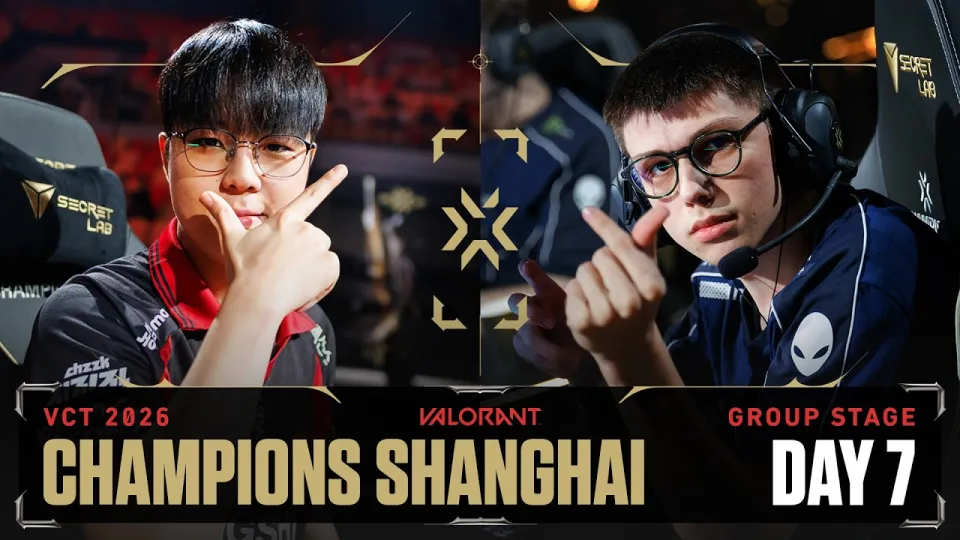
Video: VALORANT Champions Shanghai — Group Stage — Day 7
You can order the same kind of articles for your own video to boost it on YouTube and Google. Just message the Telegram bot @sat_sit_bot. It writes articles around your video, embeds the video and publishes them on popular niche websites (no ads). Try it free: 50 articles on us.
· based on the channel VALORANT Champions Tour
Key takeaways
- VALORANT Champions Shanghai runs September 24 to October 18, with sixteen teams from Americas, CN, EMEA and Pacific.
- Groups decide seeding and survival: top teams advance, bottom teams face elimination before the playoff bracket.
- Day 7 of the group stage aired on October 1 on the VALORANT Champions Tour channel.
- Two different Masters champions in 2026 mean no single region enters Shanghai as the clear favorite.
- Viewer complaints about repeated tech pauses and CN teams' late-round collapses framed much of the Day 7 discussion.
VALORANT Champions Shanghai is the season-ending world championship where sixteen teams from the Americas, CN, EMEA and Pacific play a group stage first, then a playoff bracket, to crown the 2026 world champion. The group stage is the filter: it decides who reaches the bracket, who gets a favorable seed, and who goes home before the trophy rounds even start. Day 7 of that stage, published on October 1 by the VALORANT Champions Tour, is a direct look at how tight that filter has become — follow the official channels via VALORANT Esports on X for brackets, results and schedule updates.
What is VALORANT Champions and why does the Shanghai group stage matter
VALORANT Champions is the biggest trophy of the VCT year, and Shanghai hosts the 2026 edition from September 24 to October 18. Sixteen qualified teams — drawn from Americas, CN, EMEA and Pacific — enter the group stage, and only the strongest survive into the playoff bracket. That structure makes the group stage more than a formality: every map win affects seeding, and every loss pushes a team toward an early exit. The event description frames the stakes plainly, noting that familiar names, new contenders and a fearless generation of challengers are all competing for the same prize. For teams from smaller or less-deep regions, the group stage is often the only stage they get, which is why Day 7 results carry real weight for the whole competitive year.
How the sixteen-team group stage shapes the bracket
The group stage in Shanghai works as a two-step filter: teams first fight for advancement, then for the seed that determines their playoff path. In practice that means three things for every squad in the lobby:
- Advancement — finishing inside the qualifying places of a group is the minimum goal; anything below it ends the run in Shanghai.
- Seeding — a higher seed usually means avoiding the strongest bracket opponents in the first playoff round, which matters enormously in a single-elimination or double-elimination format.
- Map differential — tiebreakers often come down to round and map difference, so clean 2-0 wins are worth more than scrappy 2-1s.
Because the field mixes four regions, group draws also create stylistic clashes: EMEA's structured default play against Pacific's aggressive mid-round calls, or CN's set-piece executes against Americas' individual firepower. Day 7 sat right in the middle of that sorting process, with several series carrying direct advancement consequences.
What stood out on Day 7 in Shanghai
Day 7 delivered close series, long technical interruptions and a lot of debate about regional depth. The broadcast drew repeated complaints about tech pauses breaking momentum, and viewers noted that some of the pauses came at moments that disrupted a team's economy or a clutch round. On the server, the standout storyline was CN teams losing rounds that looked already won — eco upsets, failed 5v2 retakes and attacks that stalled once their set strategies were read. The Yoru clone moment late in the broadcast became an instant meme, a reminder that pro VALORANT still produces chaos even at the highest level. Meanwhile, fans argued that several teams outside CN — including squads from other regions that never qualified — would have been more competitive in Shanghai, a familiar debate whenever a host region underperforms.
Why viewers keep asking about tech pauses and CN form
The most repeated questions around Day 7 were about production and about the host region's level. On tech pauses: long broadcasts with multiple maps, remote production elements and player hardware checks can all trigger stoppages, and the broadcast team typically resolves them without changing the official result. On CN form: the criticism focused on adaptability rather than raw skill — when default executes failed, attacks lacked a backup plan, and retakes were lost in numbers-up situations. That pattern is fixable with coaching and mid-round calling, but at Champions there is very little time to fix it between maps. The broader point fans raised is structural: with only a limited number of CN slots, the region's depth is tested less often than its top teams, so a rough group stage looks worse than the underlying talent might warrant.
Which teams and regions look strongest heading into the playoffs
The playoff picture in Shanghai is shaped by two facts: two different Masters champions in 2026, and no region clearly dominating the group stage. Having two separate Masters winners this year means the field has at least two proven trophy-closers, and both enter the bracket with real confidence. EMEA and Pacific squads have shown the most consistent mid-round discipline, while Americas teams lean on explosive individual plays that can swing a series. CN's representatives remain dangerous on their map picks but need cleaner late-round execution to survive knockout VALORANT. The practical takeaway: seeding matters more than usual this year, because the gap between the top eight and the rest is thin enough that a bad bracket draw can end a favorite's run early.
Useful links
- Official VALORANT Esports news and brackets: https://www.valorantesports.com/news
- Event hub and schedule: https://www.valorantesports.com
- Live and VOD coverage on Twitch: https://www.twitch.tv/valorant
- Match photos from the event: https://www.flickr.com/photos/valorantesports/
- Updates on X: https://x.com/valorantesports
- Instagram: https://www.instagram.com/valorantesports/
- TikTok: https://www.tiktok.com/@valorantesports
- Facebook: https://www.facebook.com/ValorantEsports/
The bottom line on VALORANT Champions Shanghai
The Shanghai group stage is doing exactly what it should: separating teams that can adapt under pressure from teams that only win when their prepared plays land. Day 7 showed a tournament where tech issues and late-round collapses can decide a series as easily as a highlight play, and where no region can coast on reputation. The playoff bracket will be tighter than the group standings suggest, especially with two Masters champions in the field. For full VODs, spoiler-free timestamps and schedule updates, the VALORANT Champions Tour channel is the source to follow, and the fastest way to track results is the official VALORANT Esports account on X.
Questions & answers
How many teams play in the VALORANT Champions Shanghai group stage?
Sixteen teams qualify for the event, split across the Americas, CN, EMEA and Pacific regions. They play the group stage first, and only the teams that advance reach the playoff bracket for the world title.
Why were there so many tech pauses during Day 7?
Long broadcast days with multiple maps and production checks can trigger stoppages, and the broadcast team resolves them without altering results. Viewers found them disruptive, but they are a production issue rather than a competitive one.
Did CN teams really underperform in the group stage?
The criticism centered on adaptability: CN squads lost eco rounds and 5v2 retakes, and attacks stalled when their set strategies were countered. That is a coaching and mid-round calling problem, and Champions leaves little time to fix it between maps.
Where can I watch the VALORANT Champions Shanghai matches?
The VALORANT Champions Tour channel on YouTube carries full VODs of each day, and live coverage runs on Twitch at twitch.tv/valorant. The official X account posts schedules, results and bracket updates.
Source: VALORANT Champions Shanghai — Group Stage — Day 7 · Markdown version